


By Andrew Asani
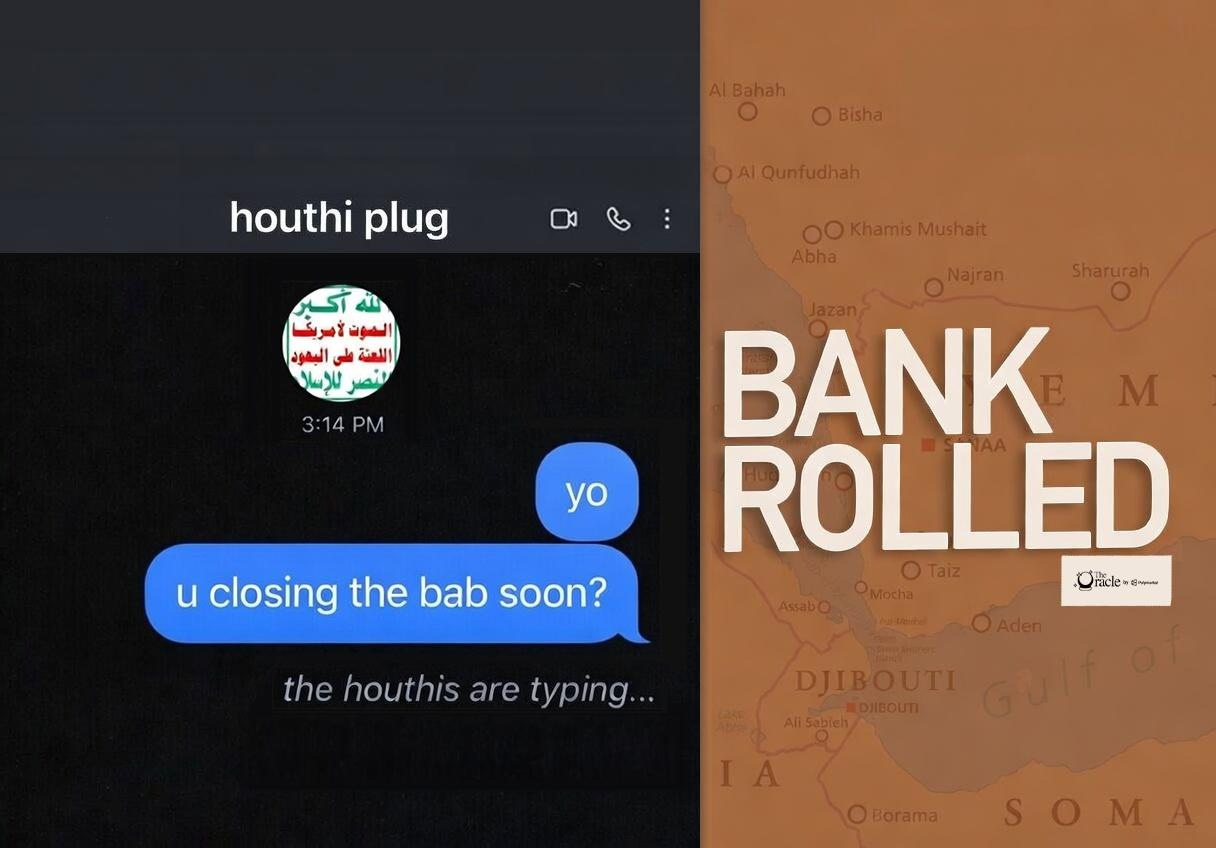
In early April, odds on Polymarket that the Houthis, an Iranian-backed Shi’a rebel group based in northwest Yemen, would force the closure of Bab al-Mandab before April 30 rose from 21% to 30%. The rise began hours after a statement from a prominent Iranian official that Tehran “views Bab al-Mandab as it does Hormuz.” Similarly, Polymarket shows 41% odds that the Houthis will resume attacks on commercial shipping in the Red Sea by the same date.
However, from the perspective of this author, the odds in both markets are highly inflated, and make the common mistake of overestimating Iranian leverage over the Houthis, which since at least 2023 have become as financially dependent on Saudi Arabia as they have their traditional patrons in Tehran.
Far from seeking to go on the offensive, my conversations with Houthi officials paint a picture of an organization that is desperately dependent on monthly payments from Saudi Arabia to keep their soldiers armed and fed.
Since the February 28, 2026 launch of US-Israeli airstrikes on Iran and subsequent closure of the Strait of Hormuz, Saudi Arabia has rerouted 7m bpd of its oil exports through the Red Sea port of Yanbu, transforming the waterway along with Bab al-Mandab into Riyadh’s most important economic lifeline. As a result, the Houthis have been hesitant to launch attacks in the Red Sea that would drive up maritime insurance costs and antagonize Riyadh.
In fact, Houthi sources I spoke with told me that the reason the group waited nearly a month to enter the war with Israel was that it was awaiting its most recent tranche of Saudi payments to come through.
The Houthis and Saudi Arabia are typically thought of as mortal enemies. But this has not been the case since roughly April, 2022. That month, a UN brokered ceasefire between the Houthis and Yemen’s Saudi-backed government ended large-scale fighting between both sides for the first time since 2015. Throughout 2023, the ceasefire was renewed on the condition that Riyadh provide the Houthis hundreds of millions of dollars annually to pay its civil servants and security forces.
The Houthis became more dependent on Saudi payments throughout 2025, as the Trump Administration revoked licenses for petroleum offloading at ports and increased sanctions on terminals, port managers and vessels making deliveries in Houthi controlled territory, significantly reducing the group’s revenue from customs duties and its access to fuel needed to produce ballistic missiles.
To Text a Houthi
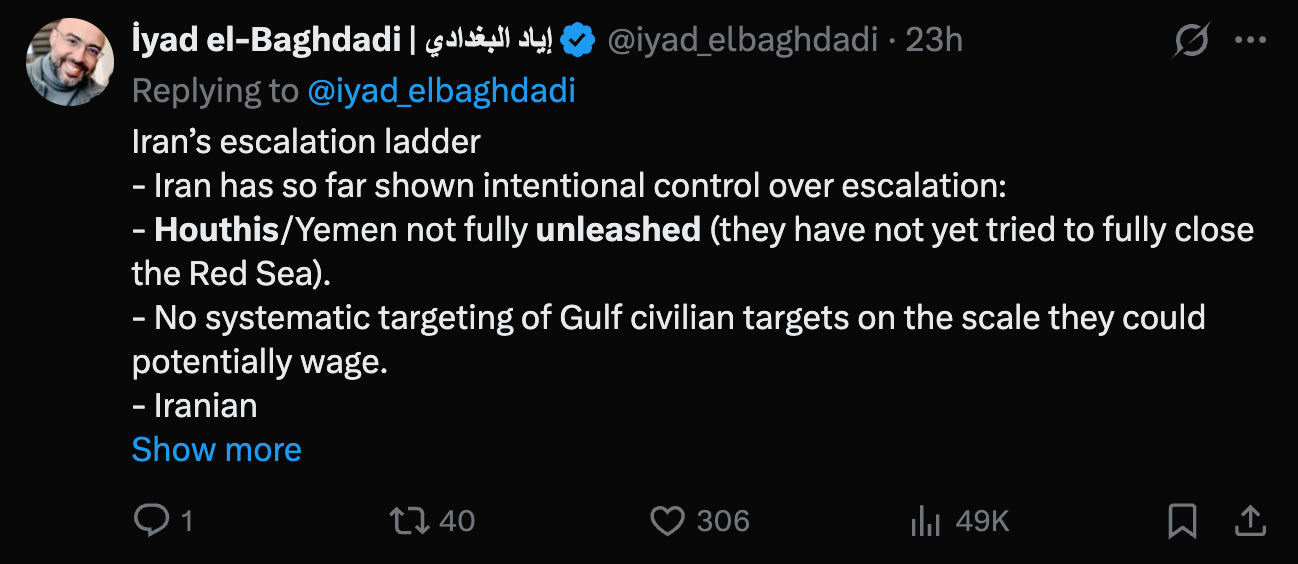
Most analysts portray the Houthis in Yemen as a puppet of Iran, a “card” that Tehran is waiting until the right time to play. While the Houthis have been heavily equipped militarily by the IRGC, the Twitter Yemen experts tend to be ignorant and uninterested in the local forces shaping their decisionmaking.
I first became acquainted with the Houthis in 2014 while working in the Yemeni capital of Sana’a as an editor at The Yemen Times, the country’s largest English language newspaper. For most of that year, the Houthis were one faction among many in Sana’a, whose spokesmen were eager and friendly sources happy to spin the news for our mostly western readership.
Following the Houthis’ partial takeover of Sana’a on September 21, 2014, the group’s tone shifted from a desire to assist to a gradually increasing demand for control over what we published. On January 19, 2015, I left Yemen after a renewed round of fighting between the Houthis and Yemeni government forces finally made living in Sana’a unbearable.
That morning, I woke up to the sound of distant gunfire, a not wholly uncommon occurrence. Fighting quickly shifted to my neighborhood in Sana’a’s southern Hadda district, the site of Yemen’s Presidential Palace. By 10am, a Houthi sniper placed himself on my neighbor’s roof, continually harassing government forces who fired back with machine guns and occasional tank fire.
When a ceasefire had been reached that afternoon, I wasted no time and booked a flight to Jordan. However, my contacts among the Houthis would later prove useful after beginning a career in risk advisory. Following the outbreak of full-scale civil war in Yemen on May 26, 2015, many foreign companies that operated in Yemen were forced to leave behind valuable assets underwritten by insurance companies.
In many instances, Houthi leaders proved useful in helping to negotiate the safe release of these assets. As when we first met, my Houthi contacts were often polite and eager to assist, motivated by a deep desire to maintain an outlet to the outside world. Today, many Houthis are motivated by a similar desire to remain on good terms with neighboring states and avoid getting drawn into regional conflicts, particularly on behalf of Iran.
According to one high-ranking Houthi military source operating within the Third Military Region in Marib, “the Houthis are a Shi’a group, however outside their northern stronghold of Sa’ada…many of those fighting with the Houthis are Sunni tribesmen who joined the movement to secure support in local disputes against their rivals. Many of these fighters have switched their allegiance over the years from Ali Abdullah Saleh, to the Islah party, to the Houthis. If they don’t get paid, they could switch allegiances again.”
Speaking on condition of anonymity for this piece, one top official within the Office of the Commander of the Houthi 6th Infantry Brigade in Taiz confirmed to me that the month-long delay in Houthi strikes on Israel was driven by a desire to secure payment from Saudi Arabia.
“The issue of Saudi payments to the Houthis [is] contentious… Our frontline forces are underfed and barely have any ammunition or fuel; they’re barely holding on…The leadership waited before receiving its latest payment from Saudi before doing anything that might anger them.”
What I’m Watching
To forecast what happens next, it’s helpful to think of the Houthis as caught between their main patrons: threatening Saudi oil exports from Yanbu would jeopardize their financial lifeline. And alienating Tehran would cut off their main source of weaponry.
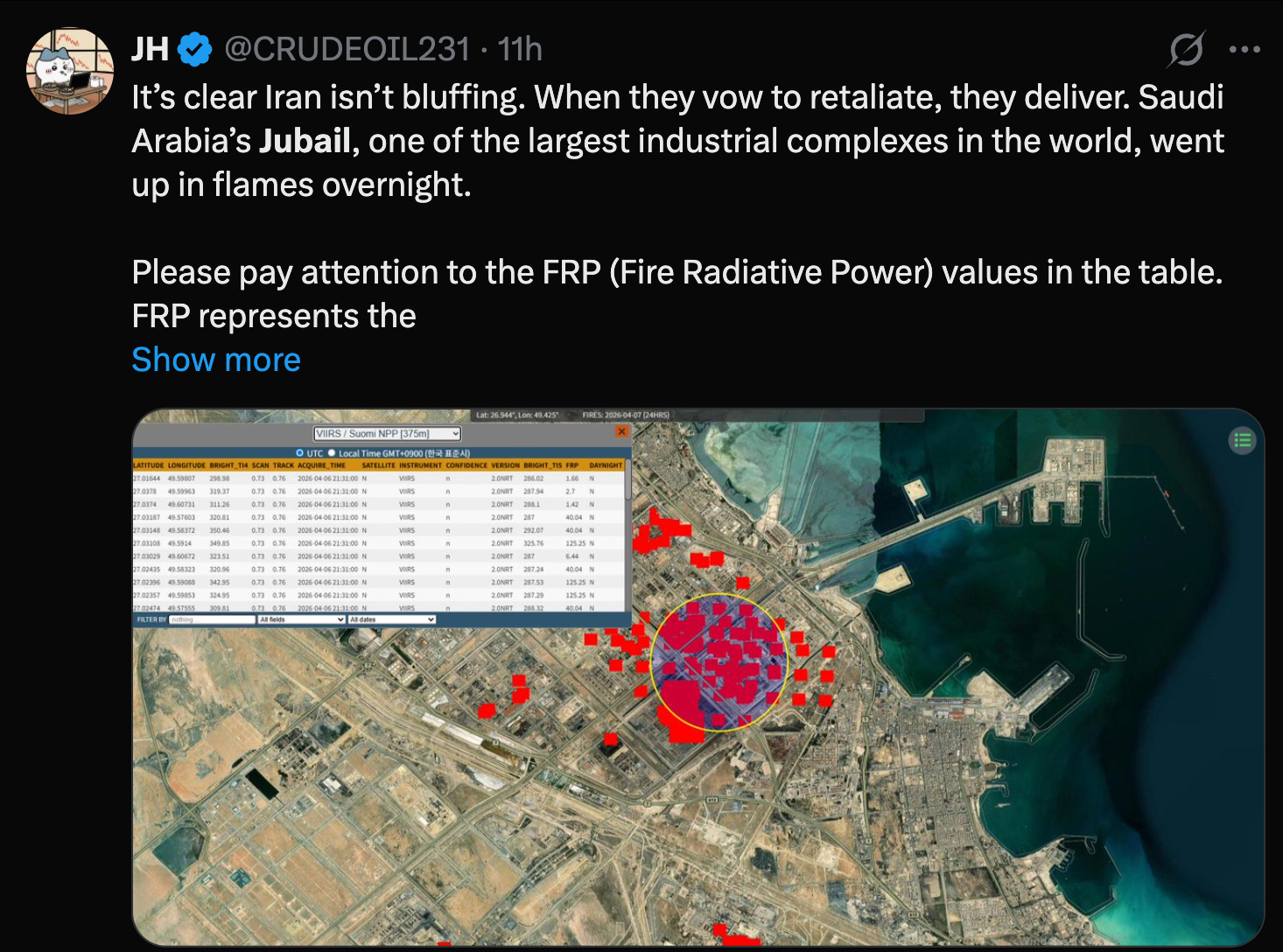
Last night’s dramatic Iranian escalation against Saudi petrochemical facilities in Jubail raises the stakes of the war significantly along with the possibility that Riyadh might join the US-Israeli war effort directly.
Doing so might serve as the final trigger that forces the Houthis to pick sides in the war. On more than one occasion, Houthi leaders have set Riyadh’s participation in US-Israeli strikes on Iran as a red line that would force the group to close Bab al-Mandab. Most recently, on April 06, 2026, senior Houthi official Muhammad Ali al-Houthi claimed the group would refrain from attacking Saudi Arabia so long as Riyadh “adheres to de-escalation.”
That said, the odds that the Houthis will resume attacks on commercial shipping or close Bab al-Mandab should be revised down to track more closely with the likelihood of Saudi Arabia and the UAE joining the war against Iran. Currently, Polymarket puts the odds of both countries doing so at 8% and 6%, respectively.
The best sources to follow for updates include the daily “Iran Report” by the American Enterprise Institute’s Critical Threats project, which does a great job at cataloguing every kinetic strike in the region. For minute to minute updates, great X accounts to follow include @OSINTdefender, the Yemeni @SanaaCenter think tank, and Times of Israel correspondent @manniefabian.
* Andrew Asani is the pseudonym of an OSINT-HUMINT researcher who tracks extremist patronage networks across the Middle East, including Syria, Yemen, North Sinai, Libya and Sudan. He advises clients performing strategic advisory and litigation support, and his work has been featured in numerous academic journals and news outlets.
Disclaimer
Nothing in The Oracle is financial, investment, legal or any other type of professional advice. Anything provided in any newsletter is for informational purposes only and is not meant to be an endorsement of any type of activity or any particular market or product. Terms of Service on polymarket.com prohibit US persons and persons from certain other jurisdictions from using Polymarket to trade, although data and information is viewable globally.
interesting primary sources. but your assertion that houthi is overpriced is significantly dependent on the pricing of the saudi/uae entrance to the war being so low. such a scenario is underpriced in my view, so overall truth is in middle imo. either way some potentially interesting trades, some clear mispricing here imo. would be nice if we in usa had access to these political contracts!!!
优质的第一手信息