




Brian Derrick is the CEO and founder of Oath, a platform that uses algorithmic forecasting to help liberal donors maximize the impact of their contributions. A former campaign manager and Democratic political operative, Brian has been moneyballing every competitive House and Senate race in the country since the Supreme Court’s Callais decision dropped.
The Oracle spoke with him to unpack how the ruling will reshape the congressional math in 2026 and beyond.
This interview has been edited for length. All answers are his own.
What did the Supreme Court’s Callais ruling yesterday do?
The case was about the Voting Rights Act of 1965, specifically section two, which deals with how race is considered in redistricting decisions. The decision essentially says that as long as you claim the motivation for redistricting is partisanship and not outright racial discrimination, it’s fine. It created an avenue to eliminate majority minority districts, but also to gerrymander more aggressively generally.
What this decision changes is it severely, severely narrowed the Voting Rights Act. In the dissent they talk about it now just being a meaningless piece of paper. It’s also created a supercharged arms race from both parties around redistricting. For Republicans, it means they can go into states in the South like Tennessee, South Carolina, Alabama, and Mississippi, where there are currently majority Black districts that have been there for many decades, and break those up and dilute those voters across many other suburban and rural districts to eliminate a Democratic seat. For blue states, which also have majority minority districts, they also can break up those districts and dilute Republican voters in other places. So this is also an unlock in blue states.
The loser here is voters, because it means more and more politicians are choosing their voters instead of voters choosing politicians.
I know the decision threw out one district, the Louisiana 6th, but what does redistricting mean for the whole state map?
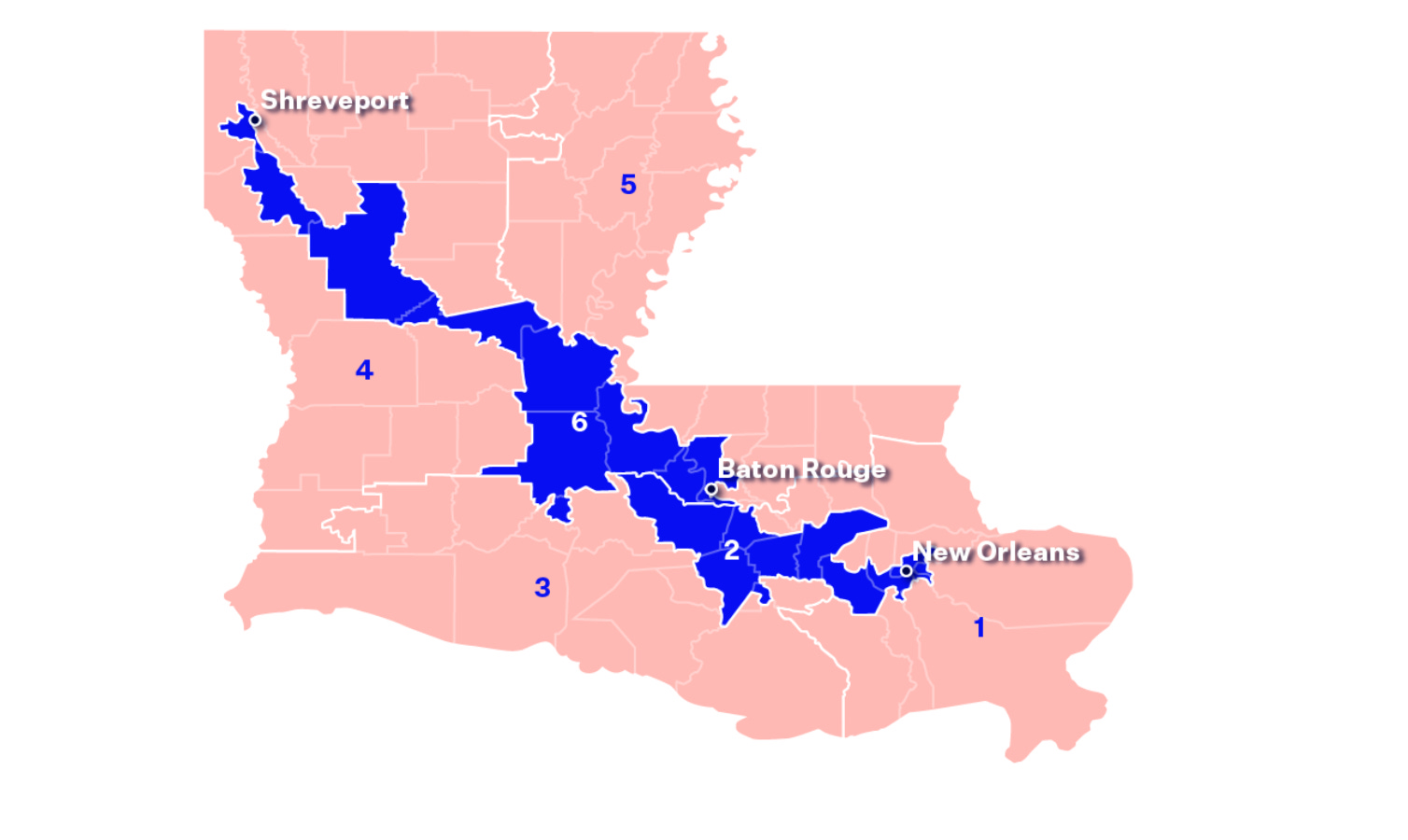
Courts do sometimes order a third party to draw a map, but oftentimes they just say “not this one” and send it back to the legislature. That’s what’s happening here. In Louisiana, they’re going to have to propose a new map. The governor has already said they’re going to delay their primary in order to redistrict. They could just break up Louisiana Six as ordered by the court, or they could actually come after Louisiana’s Second Congressional District as well, which is the New Orleans-based seat, and go for a maximal gerrymander that would eliminate two Democratic seats. So it’s unclear right now which path they’re going to pursue. Their original primary date was just two weeks away, so they’re going to have to rush through a decision.
Louisiana 06 jumped heavily towards Republicans after the decision dropped. Is that an appropriate reaction?
I would actually probably push it a little bit further. I would be favoring the Republican side right now in this seat, because I think Trump is going to get personally involved in trying to juice this as much as possible.
What are the odds Republicans redraw Louisiana 02 as well?
Maybe 50-50 chance they do it. They want to maximize here, and Trump is going to be pushing for it.
How many seats total could this mean for the midterms?
In our base case, up to four seats could be now in play for 2026, including the Louisiana district the court struck down directly. For 2028 it could be up to 12.
The other states that could redistrict for the 2026 midterms are South Carolina and Tennessee, because they have late primaries. The districts impacted would be South Carolina Six, which is Jim Clyburn’s seat, and Tennessee Nine, which is Memphis-based.
What odds would you put on Tennessee and South Carolina redistricting?
Tennessee is more likely than South Carolina, although Lindsey Graham has been getting involved and getting very vocal about redistricting South Carolina, they want Jim Clyburn out. I’d say 50-50 on both at this point.
Our House seats forecast barely moved after the ruling. But you’re saying Republicans could pick up four. Why is the market not reacting?
My guess is that gas prices just went up almost 10 cents overnight to a four-year high, particularly in battleground states, and we just got a weak GDP report this morning. Those are probably playing a bigger role than the Callais decision right now. Republicans can only net benefit from Callais in 2026, there’s no path for them to lose seats as a result, but with cases like this they tend to be too esoteric for voters to respond to directly, so the economic headwinds are swamping the redistricting tailwind in the market right now.
What is your overall forecast for Democratic House control?
Based on current data, I would put it higher than the current 85% market odds. I would feel more confident at around 90 to 93%. The 7% is sort of pricing in some major global or national event in the next four or five months. If the election were today, I’d put it at 99%.
We see the absolute maximum upper limit as 242 Democrats to 193 Republicans. We think that’s basically the upper limit of what Dems will achieve in 2026, which means the current market is pricing in roughly the best case scenario for Democrats. A base case would be more like 200 to 202 Republican seats. The battleground has narrowed a lot from gerrymandering over the last 20 years, which has shrunk the number of seats decided by a narrow margin.
Is there an even worse scenario for Democrats if Republicans go really aggressive?
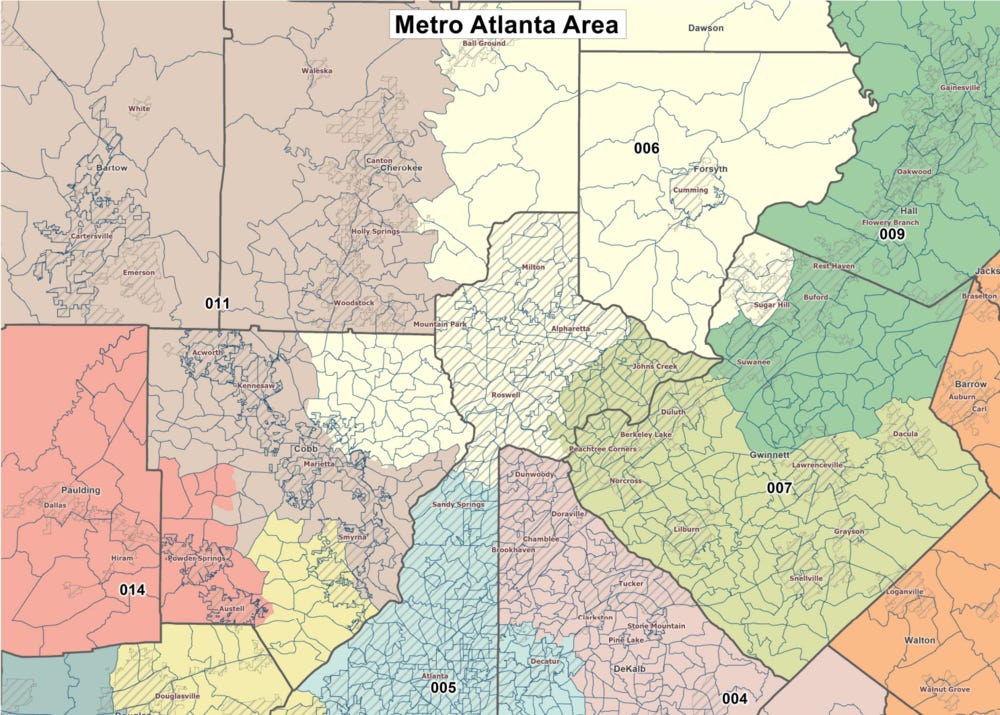
The more extreme, unlikely scenarios involve states like Georgia, Alabama, and Mississippi. In Georgia, they would come after Georgia’s Second Congressional District, that’s the easier one. There are four Democratic districts packed in and around Atlanta that would be much harder to break up because Georgia is a 50/50 state, and those voters have to go somewhere. The more of one party you have to work with, the easier it is to gerrymander, but a 50/50 state is harder. And Brian Kemp, who’s the current governor through November, is no fan of that kind of play.
But the bigger issue is that people are already voting in Georgia. Ballots are already sent out. They would be canceling a currently ongoing election. Even if they wanted to and had everyone on board, I don’t know that it would even be possible. That’s why I feel maximally bearish on Georgia moving this cycle.
Florida is already a lock, they just passed their map and it’s about to be signed.
Let’s go to the Senate. Do you see a path for Democrats?
Republicans currently control the Senate by a three-seat margin. In order for Dems to take control, they need to hold all of their seats, including competitive races in Georgia, Minnesota, New Hampshire, and Michigan. And they need to flip four of five Republican seats: Alaska, Ohio, North Carolina, Maine, and Texas. That’s a very difficult task. We are bearish on control, but confident in Dems picking up seats, which is not a given. Back in 2022 Dems won the popular vote for House seats by around seven points and still lost seats, so they can move in opposite directions. But that won’t be the case this year.
How do you feel about Jon Ossoff in Georgia?
Democrats have been massively overperforming in Georgia. We flipped some Public Service Commission races last November by over 20 points, statewide races in an off cycle. And we had the Georgia special to replace Marjorie Taylor Greene where Democrats overperformed by more than 20 points, our largest overperformance of the Trump era. Ossoff is a star, he’s doing incredible on fundraising, and the Republican primary is a disaster. If he wins by four or five points, his 2028 presidential odds go much higher. He could actually be a front runner.
Alaska, Peltola at 63%.
That’s a little surprising on the high side to me. She’s proven she can win statewide in Alaska, she very narrowly lost her seat last cycle, and this is a much more favorable environment. But polling has been dropping in a bunch of these races recently and I think there’s a trend nationally giving people confidence. I’d want to watch more closely before going that high.
What about Maine and Susan Collins? Platner just became the de facto nominee after Mills dropped out. Polymarket has Platner at 71%.
Susan Collins is a cockroach. You literally cannot beat her. I have several members of my team who have worked in Maine politics, for Gideon and others, and they pretty universally believe Collins will pull it out. I would not put money on Platner at 71%.
Texas, any chance of a flip?
We have it rated as the eighth or ninth most competitive race of the cycle. It’s shocking, but not shocking because nothing Trump does is shocking, that he’s refusing to weigh in for Cornyn. That could change the dynamic. But we are not ranking this highly, certainly not in the top five most competitive.
Putting it all together, Dems pick up seats but probably fall one short of Senate control due to Maine and Texas?
That’s exactly right.
What Supreme Court wildcards could still shake things up?
There’s a case that could make it possible for parties to spend unlimited sums on behalf of candidates, which would just unlock a lot of money and be a significant factor.
And I expect one of the justices to step down at the end of the term in June.
Alito or Thomas?
I think it’s probably one of them. They’re motivated to have Trump pick their successors, and I think that lesson, the Ruth Bader Ginsburg lesson, has been learned. Any vacancy would be a significant mobilizing event for Democrats.
Are there any markets you’d like to see on Polymarket that don’t exist?
State trifectas would be fascinating and are probably the most consequential outcome of this cycle. Will Wisconsin turn entirely blue? Will Michigan secure a trifecta? It’s wonky, but those outcomes determine redistricting in 2030, election certification in 2028, and the entire downstream political landscape.
And that’s why the timing of Callais mattered so much. My team celebrated every week that went by without the decision coming down. The ruling seemed pretty much predetermined, so delaying was even more important than the ruling itself. What’s coming in 2028, that is going to be nuclear warfare.
Disclaimer
Nothing in The Oracle is financial, investment, legal or any other type of professional advice. Anything provided in any newsletter is for informational purposes only and is not meant to be an endorsement of any type of activity or any particular market or product. Terms of Service on polymarket.com prohibit US persons and persons from certain other jurisdictions from using Polymarket to trade, although data and information is viewable globally.
I'm tired of the 2-party axis of idiocracy. We need a responsible adult district in every state.
Democrats don’t deserve to be in charge of anything. They hate the US, morality, and themselves.